
Lunchtime Recital by Gina Kruger – Friday 4th February 2022
at 12.30
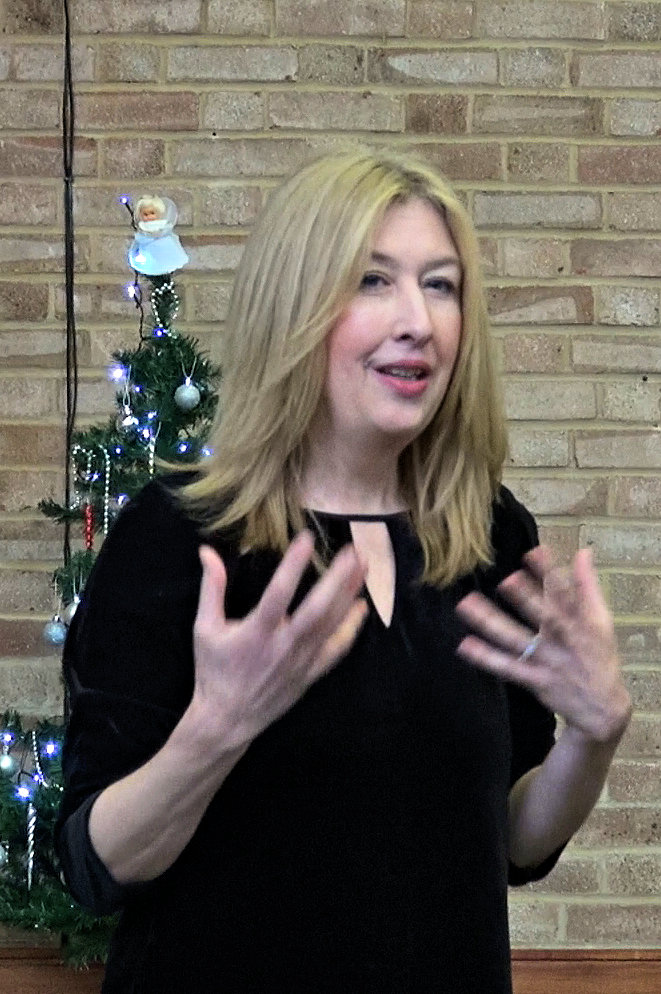
Gina Kruger’s Recital Programme for 4th February 2022
Gabriel Fauré 1845-1924
Faurè was eventually admired as the most important composer of his time in France. He was influenced and encouraged by Saint-Saens. Eventually, Faurè devoted summers to composition as his duties, as an organist, and as Director of the Paris Conservatoire, left little creative time during the academic year.
- Nocturne In E- flat (Op.36 Number 4)
- Impromptu (Op.34 Number 3)
Debussy 1862-1918
One of the most influential composers of the 20th century, Debussy took inspiration from Eastern music, and stretched the harmonic boundaries of Western classical music with innovative use of harmonies and colours. He did not see himself as an ‘Impressionist’ but aligned himself with the Symbolist poets. The first, well known work below is from Suite Bergamasque, after a poem by Paul Verlaine:
- Clair de Lune
from Preludes:
- La fille aux cheveux de lin inspired by a poem by Leconte de Lisle
- Ondine The legend of the water-nymph, and her powers to seek revenge
- Ce qu’a vu le vent d’Ouest An impression of the violent wind, which was revolutionary writing for the piano in Debussy’s time. The title is inspired by a Hans Christian Andersen fairy tale “The Garden of Paradise”
- Les Collines d’Anacapri Inspired by the village in Capri, with bells echoing through the hills
from Image:
- Poisson D’Or from an image of a fish on a Japanese lacquer panel
from Children’s Corner: (Pieceswritten for Debussy’s daughter Chou Chou).
- Snow is Dancing
Olivier Messiaen 1908-1992
The organist and ornithologist who, continuing Debussy’s shift from conventional harmonic and melodic models, influenced scores of composers through his own musical language and his teaching, and saw music in colours. Integrating chant, new scale patterns, bird song, whilst using new rhythmic devices, Messiaen’s music, much loved (sometimes criticised), continues to mystify audiences– as its foundations suggest it should .
- X. Regard de l’Esprit de Joie from Vingt Regard sur L’Enfant-Jesus Contemplation of the Holy Spirit…a dance.
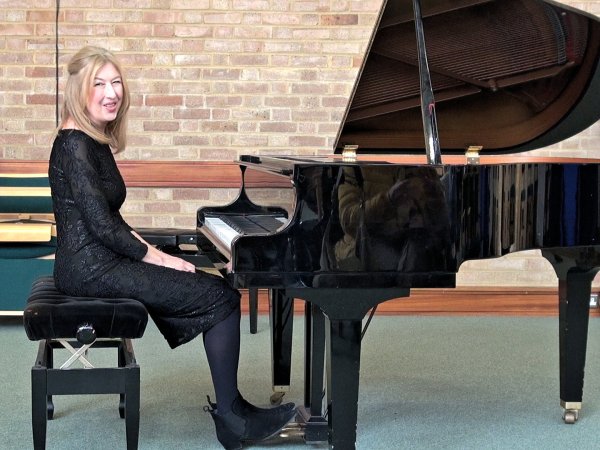
Gina’s programme had a distinctly French flavour, but whilst starting with some familiar pieces by Fauré and Debussy she took us on to some quite new ground.
Gina gave us a hint of what to expect in her mid-recital explanations. Debussy in his works had started to explore a different approach to harmony, to the harmonic language, stretching the boundaries of Western classical music. He used the full range of what the piano and harmonic language could do at the time. And so he could be a little disparaging of Fauré, saying he “wrote charming pieces”.
And the pieces that followed did everything that it said on the tin, dramatic and turbulent – as were Gina’s hands, blown by the West Wind, as they moved over the keyboard.
And the final piece by Olivier Messiaen continued Debussy’s move from conventional harmonic and melodic models in a theological work that stretched harmonies and rhythm.
As we concluded, a challenge from the audience – “a fairly inharmonious piece: we go away without any tune in our head” – took us into a fascinating interlude, regrettably a bit too quiet for many, though it comes over well in the recording with the sound boosted.
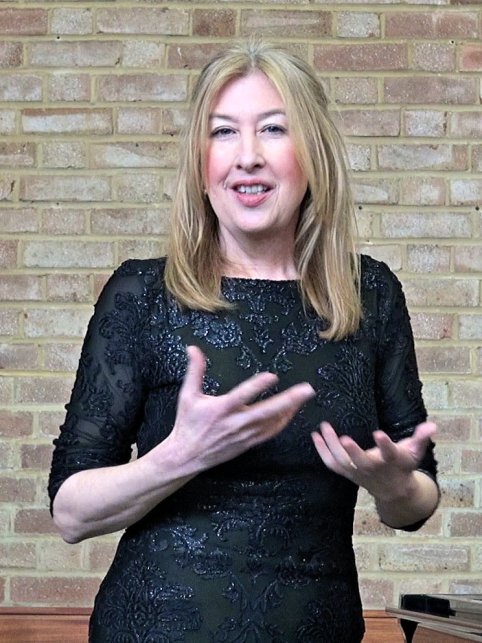
Gina thought Messiaen would take issue with the comment on his musical language. Our ears might not hear it, but Gina needed to hear it in order to memorise it. It was an ethereal thing. The harmonic language had developed to the point that it could sound foreign to our ears.
Messiaen was (and is) very popular in the US. His music comes from a place of mystery, but once she got into it, she was “hooked”, like with a good book. She told us she plays each piece with trepidation because they are not pieces that come naturally. But she was moved to learn this “foreign language” to continue a tradition. The musical scores are also fascinating, planned in detail by a musical architect. Many of the pieces he wrote have a deep literary theological side and each piece links to another, so they are fascinating to work on – though they still often mystify audiences.
After years of playing many classical composers, she finds their music more difficult to play, their formulaic and repetitive approach needing concentration in a quite different way, so when presented with new approaches there was an opportunity to lose herself in them.
So it was a fascinating journey for us, even if we were a bit mystified – well some of us at least!
Thank you Gina.
 Potters Bar United Reformed Church