
Sunday 22nd June – Family Service led by Pastor Peter Gooch
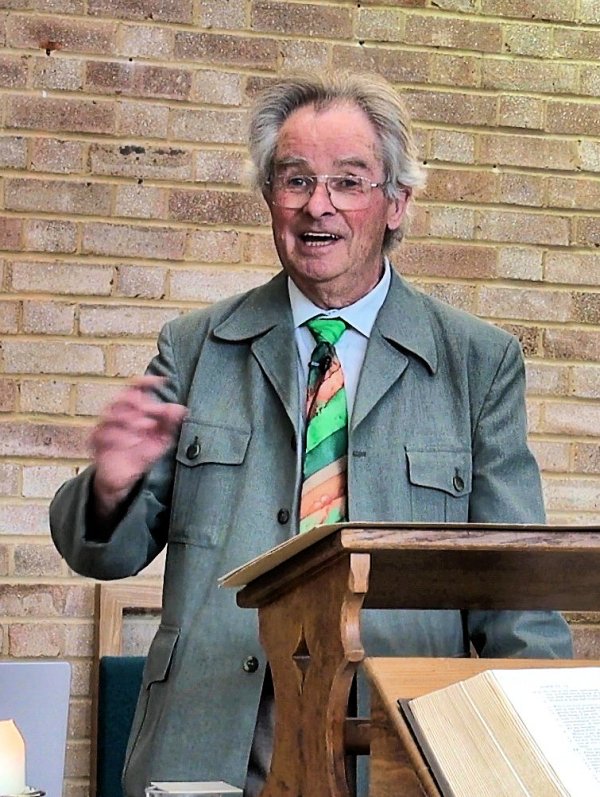
Good to have Peter back with us, brim full of the Good News and ready to burst into a song if the mood took him.
Peter talked about our triune God, “three in one, and one in three”. God was three persons, and yet he was one God. Each part was fully God; each was eternal, almighty. Wayne Grudem’s diagram took God as a circle with three division lines giving three spaces for each person. Each division line was dashed to indicate that each person of God was equivalent to the whole. We probably thought of Jesus first. Then we might think of God the Father who’s mentioned in the Old Testament from creation onwards and into the New Testament. Last came the perhaps mysterious part of God, the Holy Spirit.
And so it was in Paul’s blessing in 2 Corinthians 13, vv 13. We started with the grace of our Lord Jesus Christ, then the love that is of God and finally the fellowship of the Holy Spirit. And Peter chose to focus on those three words – grace, love, and fellowship.
Firstly grace. Paul wrote “it is by grace you have been saved through faith, and this not from yourselves. It is the gift of God, not by works, so that no one can boast”. So, if we were to die tonight and find ourselves standing before Jesus, and he were to ask us, “Why should I let you into my heaven?”, what would we say in answer? Well, it was no good talking about living a good life because God had told us plainly that we were far too wicked to make it to heaven on our own efforts. God had said that our entry permit was not based on what we’d done. It was based entirely on what Jesus Christ had done and our personal response to that. For it was by free grace, God’s unmerited favour, that we were saved or delivered from judgment and made partakers of Christ’s salvation through our faith. It was our choice to accept that. God’s love for us was unconditional. Forgiveness of sin and eternal life in Christ Jesus were free gifts of God. But, like all gifts, they needed to be accepted and used. And there was joy and peace when we took on board for ourselves the grace of our Lord Jesus Christ.
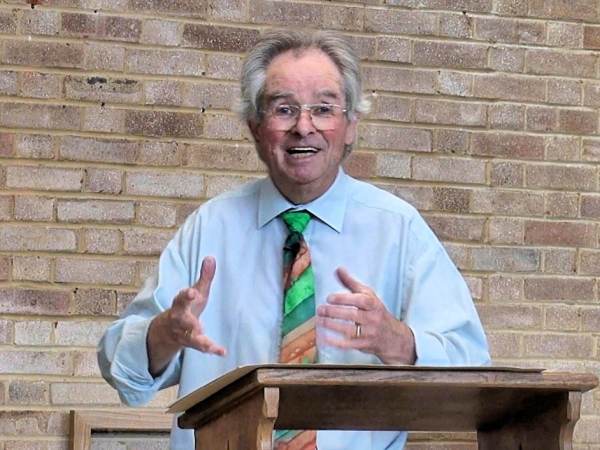
Then to love. In John, chapter 3, and verse 16, we were told that God so loved the world, that he gave up His only begotten son, so that whoever believed in him (trusted in, clung to, relied on him) should not perish (come to destruction, be lost) but have eternal life. We looked to Jesus, believing that He would save us from the deadly bite of human sin. God loved us and had provided a way for us to have a right relationship and peace with Him. God’s love reached out to us all, and in this God set a pattern of true love, agape love, the highest form of love, and devotion. God had dearly paid with the cost of his Son, and Jesus had accepted a punishment that should have been ours
The belief that we had in God required action on our part. To truly believe in God was more than just an intellectual agreement. When we truly believed in God, we would be putting our whole trust and confidence in Him, and putting our present and future plans, our eternal destiny, into his hands. We’d change our lives to line up with his plans for us.
And finally to fellowship. Jesus had told his disciples he would ask the Father to give them another helper who would stay with them forever. It was the Spirit who revealed the truth about God. He remained with us and was in us. The moment we accepted Jesus as our Saviour and Master the Holy Spirit would be given to us as a helper and a counsellor, bringing the power and resources of Jesus to our lives and particular situations.
And to close Peter shared with us a song by James Milton Black.
Since Jesus my Savior from sin rescued me
Life’s pathway shines brighter because I am free
No harm can befall me though foes should assail
My refuge is Jesus, his love cannot fail.
My heart overflows with a wondrous delight
For Jesus is with me by day and by night
His love ever flowing so boundless and free
It never can fail, ’tis for you and for me.
 Potters Bar United Reformed Church