
Sunday 25th May – Family Service led by Mike Findley
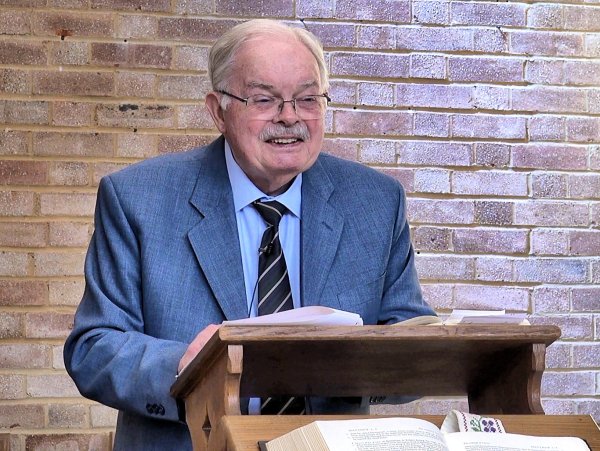
It’s always a pleasure to have Mike back with us. He makes us think. And the vision of his “dry bones” (see later) creaking as they came down the stairs first thing in the morning resonated with many of us, I suspect.
But it was Rogation Sunday – the other end of the agricultural spectrum from Harvest festival. People would have ploughed the fields and planted the seeds, and then they would put everything in God’s hands, asking God to bless the crops. In those days faith had been simple, deep and profound, because you couldn’t control things, so you put everything in God’s hands.
Mike liked this concept of simple faith: in life we could do certain things ourselves but would come to a point when we had to say, “I’m putting it all in God’s hands”. Faith was not just accepting a set of beliefs, it was a doing word, a daily renewal of the practice of fellowship with God. Faith enabled us to live in the world. It gave us the strength to go out into the world, to take all of life in its stride.
Mike reflected on the readings from Ezekiel 37 and John 5. Ezekiel had died in exile, and the dry bones were meant to represent the people of Israel in exile, dead, powerless. Mike felt that in one sense we too were dried up bones, both individually and collectively as a church, because unless we changed we would get older and the church would die. We needed the breath (or wind, spirit) of God coming into our lives (the Hebrew word Ruach meaning God in action). As at the beginning of Genesis, where God’s wind blew over the face of the earth, a breath of life could blow over us, change us, and move us to new places. But did we welcome that wind? Did we want to change our dried-up bones?
And so to John 5 and the pool of Bethzantha. A man had been there for 38 years, paralyzed, waiting for the water to be stirred up (a matter of plumbing, not an angel Mike told us). There had been a superstition that every so often an angel would stir the water, and then the first person to get into the pool would be cured.
Jesus had said to the man, “Do you want to get well? Do you want to be cured?” Initially, we’d have said yes, of course! But did he actually want to be cured because he’d been there for 38 years with people looking after him. If he was cured, he’d have to take responsibility for his life and do things for himself. Jesus could see into him, and he knew that he did want to get well, so he had made him better.
This asking of the question, “Do you want to be healed?” was the second challenge in the readings. Did we want to be healed or were we happy to continue to be a load of dry bones?
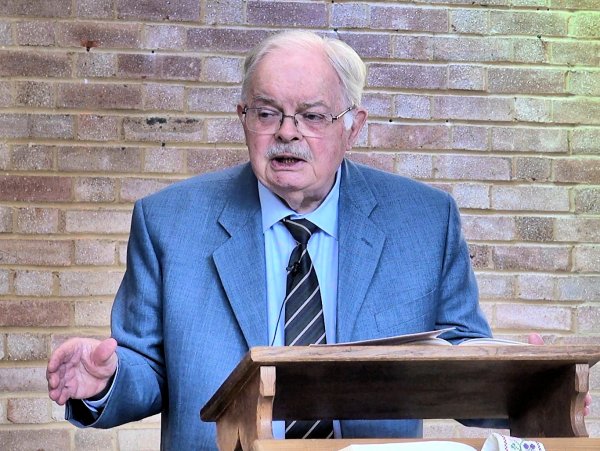
The Bible readings were challenging ones. They posed the question; did we want to be changed? And they gave us the confidence that if we did change, we would have God walking with us in our new life.
 Potters Bar United Reformed Church