
Sunday 4th May – Communion Service led by Martyn Macphee
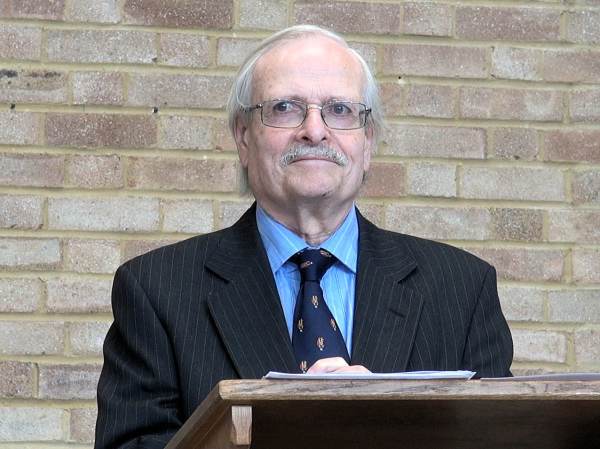
Good to have Martyn back with us. He’d chosen two Charles Wesley hymns for us. Our second, “Christ whose Glory fills the skies”, was one Martyn liked, especially on a sunny day (as it was). What could go wrong?
Martyn felt that he had a knack of choosing hymns that were not that familiar to us, and apologised. Yes, we did struggle a bit, but that was in trying to fit the words of Hymn 82 to the music of Hymn 81. We didn’t give up – we are made of sterner stuff – but it did sound a bit disorganised. (Hint for Martyn – if we can cope with that, we can cope with anything. Bring it on – we welcome a challenge!)
What a difference a week (or just a few verses in John’s Gospel) can make. Last week (with Anne) we were marvelling at the way the bumbling, terrified individuals who seemed always to be getting things wrong had been changed into leaders who began a movement that spread throughout the empire within their own lifetimes. This week the disciples had gone back to Galilee and probably waited a long time for Jesus’s next appearance, long enough for them to have become discouraged, perhaps even given up hope that they’d ever see him again. Martyn thought they were probably still struggling to comprehend the things that had gone on in that upper room. Peter had gone back to fishing – to his old way of life – and had been joined by some of the others.
Martyn picked up on the promise in Matthew’s Gospel, “Behold, I am with you always, even to the end of the age” and asked us to think about what it took to live in the company of Jesus – what was required of us. And that was what the reading from John 21 was teaching us about, he felt.
The fishermen had been out all night and caught nothing, frustrating, but just the way of the world. And that was perhaps Lesson number one of living the promise. You had to seek God’s will for your life or otherwise you could come up empty-handed. You could spend a lot of time, money, and effort doing your own thing, but it was all for naught, unless it was what God was calling you to do. It had to do with surrender. Surrendering your will to God for your life (and we were not very good at that) allowed us to begin to understand our true destiny. It might not be the things we thought we wanted but we would have the satisfaction of knowing that we’d accomplished what we were put on earth for. We had to think individually about the plan God had in store for us. We could find it by prayer, by listening to the voice of God, and following the leading of the Spirit – a difficult, subtle process.
When day had come, Jesus stood there on the beach. Yet the disciples hadn’t known it was Jesus. He came to the disciples when they weren’t looking. Jesus there for us? Oh, we just don’t realise it. We do, of course, when things begin to happen, but at the time we might not know that it was Jesus at all.
Jesus asked them if they’d caught any fish and told them to cast their net on the other side of the boat. And when it came to living with Jesus, here was Lesson 2. When the Lord tells us to do something, when that message comes through, don’t try to rationalize it, don’t procrastinate, don’t make excuses, just do it!
When the disciples came on shore Jesus was cooking fish over a charcoal fire. And he offered them fish and bread (sounds familiar?). Taken figuratively, the disciples had gone for a long time without spiritual nourishment. Jesus hadn’t been there, and they’d been living on the junk food of everyday life, so their bellies might have been full, but their spirits were pretty empty.
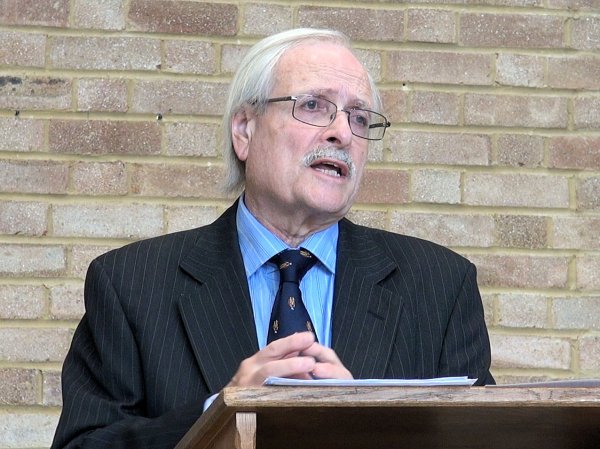
And this was Lesson 3 of living the promise. ”Watch what you eat” – and by that Martyn meant the culture that surrounded us. What we read, what we listened to, what we heard. Social media wasn’t a very healthy diet. You had to choose what you read and what you listened to: the music that you heard was important. We could feast on the Word of God, read a few verses of the Bible every day. Not very difficult to do and it would give us a lot of things to think about that had real value. Jesus had said, “I am the bread of life. He who comes to me will not hunger”.
Lesson 4 was “Live out your faith. Don’t just talk about it”. Jesus had asked Peter three times whether he loved him more than the others. And after each affirmative Jesus had responded back to him, “Feed my lambs tend my sheep”. Don’t just say you love me. Show that you love me by loving others in my name. Words of endearment didn’t mean a lot unless they were reinforced by deeds of loving kindness.
Jesus had promised to be living with each of us till the end of the age. The promise was up to us, and so to seek God’s will for our lives. If we listened for the voice of God, we might hear it from the most unlikely sources. Trust the Spirit to direct our paths and not to let the junk food of this world spoil our appetites for what was wholesome and good. And live out our faith. Let our good deeds speak of our love and devotion to Jesus Christ our Lord.
 Potters Bar United Reformed Church