
Sunday 23rd February 2025 – Family Service led by Martyn Macphee
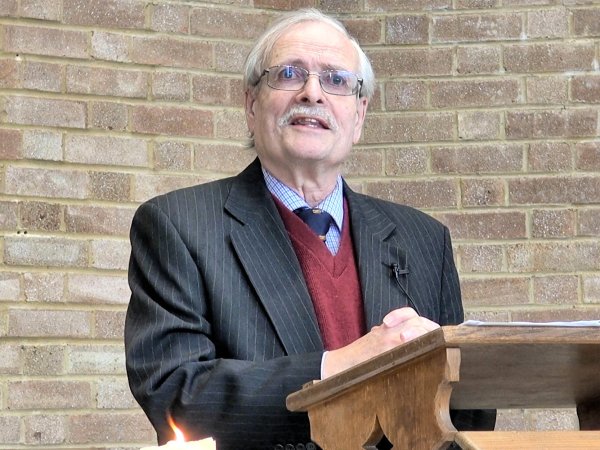
Martyn is now a regular with us. We appreciate his intros for the hymns he’s chosen, and I don’t think we really have to adjust our hearing to that “north of the border” voice. It is always rewarding to listen closely to what he has to say, however.
Martyn felt that the reading from Genesis where Joseph in Egypt tells his brothers who he is was a classic example of forgiveness, which played to the reading from Luke on love for enemies. The latter, Jesus’ Sermon on the Plain, he felt, was pretty uncomfortable reading for all of us.
Karl Barth had once commented that all sin was basically ingratitude, and Jesus was saying much the same thing to his disciples on the plain. It could not really be much clearer. That’s why we were so uncomfortable with it. The people of God responded to God’s love and mercy by showing love and mercy. Our gratitude to God was shown in how we treated other people.
More important for us than the question of purpose was the question of identity. Our identity was crucial. We could only do the Lord’s will if we understood that we were the Lord’s people. Only be the hands of Christ in this world, if we remembered the hands pierced by nails for us.
Much of our challenge dealt with memory. We remembered what blessings we had received as individual people, and as a community, and then we were empowered to be a blessing to others.
William Dyrness had put it this way, “Without an informed memory of our past and what God has done for us, our openness to the future is ultimately without direction. In the end, memory is the basis of real hope”. Our identity was in the Lord. We were God’s own people, created and called to follow the one who first loved and then redeemed us, the God of Calvary, who sent his own Son to die for our sin. This was not ancient history, but our own history, our own story.
The Rabbi Abraham Joshua Herschel had once said that the Sinai event happened once, and yet it happened all the time. It happened, as we understood that God was with us, each one of us, in our life’s journey, and that God went before us to prepare a place for us.
It was our story, a story that started in a manger in Bethlehem, went through town and country in Galilee, went to Jerusalem for the Passover and to suffer and die on the cross. Our story was the empty tomb, the disciples in an upper room, the rush of the mighty wind, the tongues of fire, and hearing the Gospel message in our own tongue. We remembered those stories and added them to the memory of a day when we had been brought to baptism, and the times when God’s Word had spoken clearly to us with words we needed to hear.
We remembered times of joy, and we remembered times of sorrow. We brought to remembrance all that the Lord had taught His disciples and us, and the command, “Do this in remembrance of me”.
And Martyn spoke of examples where people had looked beyond the horror of a war situation to provide an act of consecration and remembering or reacted to the impending loss of their homeland by thanking the Lord for loving them. And he noted that even in the quite secular society of our times, in times of disaster, danger, and stress, people remembered their roots, the roots of their faith, and came back and filled the churches for succour and assistance.
We remembered our Lord’s love for us even when times were hard and we were faced with great difficulties. We remembered the Lord’s presence with us in times of illness and loss. We remembered our identity as God’s people and that we’d been loved with an everlasting love.
Then we could ask the next question, “What should we do now as Christians?”
The text of th’e ‘Sermon on the Plain’ could then be taken in its intended sense – because of God’s love and mercy for us, we controlled love and mercy for others. We could love our enemies, not just our friends.
The whole Gospel story was a message of God’s love coming first. We loved, because God had loved us first. And only then did we respond in prayer, praise, thanksgiving, and in acts of charity and mercy.
The Golden Rule, as we had read was, “As you would like people to do to you, do exactly so to them”.
——————————————————————————————————————– We were joined for our worship by Dr John Burgess, visiting Europe for the first time with his family from America.
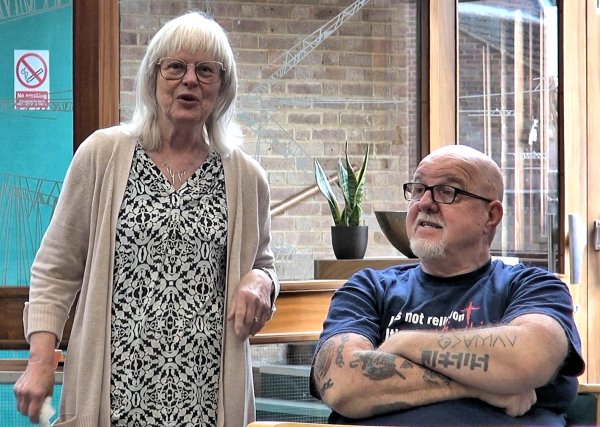
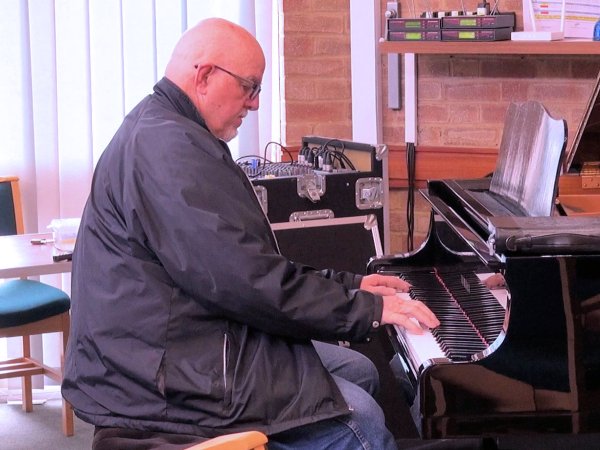
His son was a pastor and his grandson (whose recent graduation was the reason for the trip) was a football fanatic. Despite a hectic travel schedule driven by football matches in various European cities, he’d found the time to wander down the road to visit us and experience church life in Potters Bar. We think he enjoyed our Service and he responded by following Stephen’s closing music with a piano piece of his own.
 Potters Bar United Reformed Church