
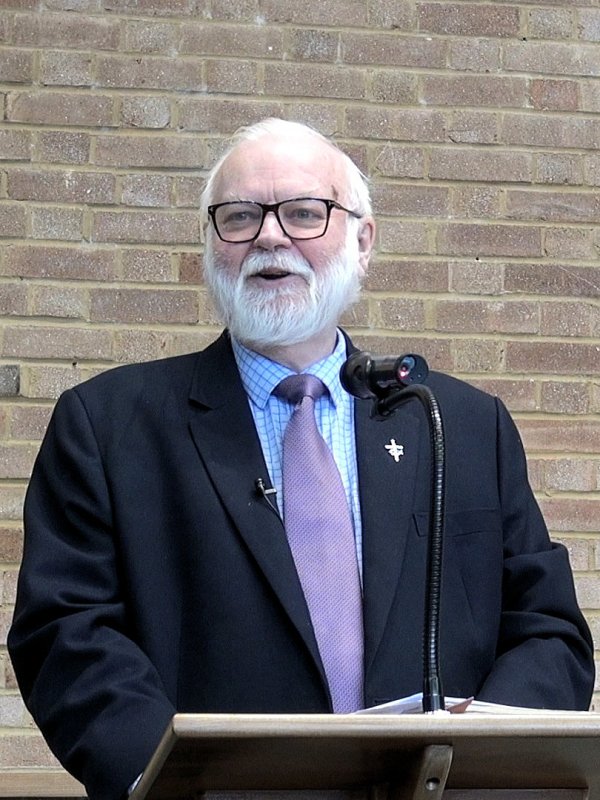
Sunday 9th February 2025 – Family Service led by Tony Corfe
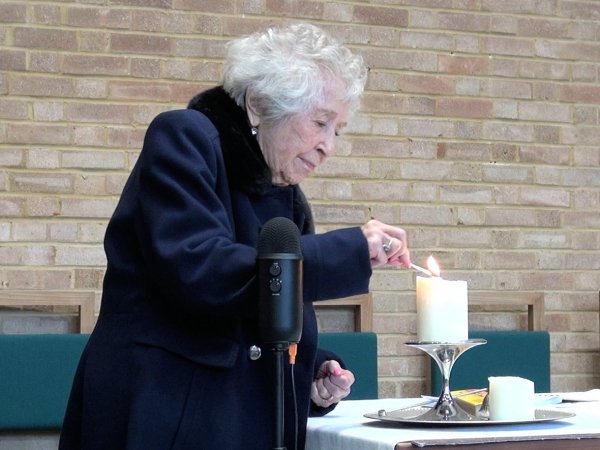
This was Tony’s second week in a row leading our worship. And he’d learnt from last week, so he invited Joan Powell to demonstrate just how many women you needed to light a candle.
On to his Address, which was based around Luke 5, when Jesus called his first disciples. And we relied on Luke to bring us the story of the bumper catch of fish.
Tony asked us to imagine the scene that we’d just been hearing about in our reading – a very familiar story. A hillside leading down to a flat area at the lake’s bank, crowded with people. Jesus going out on a boat to avoid the crush, but not too far because he lacked what we had in our church, a microphone and a loudspeaker.
Jesus had chosen the boat belonging to Simon Peter. He was casting a metaphorical net to catch men, and he’d had recognized what Peter could become. James and John were partners with Simon Peter, and Jesus had recognized this too. Luke’s Gospel told us that Jesus’ “bait” for them was a catch of fish enough to almost sink a fishing boat.
Tony supposed that Jesus would have wanted people beside Him who were educated, people who had a position in society, not rough and ready fishermen. But he had perceived the qualities he needed for his disciples were those possessed by Simon Peter, James, and John. They were indeed to become fishers of men, and the early Church showed their pivotal role in spreading the message of Jesus Christ to the world – just as when we lit the candle, we were tasked to take Jesus’s message out into the community to share.
We gave the Gospels a prime position in our services, but if the New Testament had been just the Gospels, there would have been no Christian church. Paul had been another unlikely choice to spread the word of Christ. And ACTS was not just about Paul, it was about the creation of the early Church by the apostles and their followers, fishing for men, women and their families – and great had been their catch! The New Testament was not a history lesson: it was a vivid picture of the Spirit at work.
Just like that shoal of fish, so many would come to hear of Christ. And many who heard would become followers, and the church had grown – and it was still growing today. In Africa you didn’t say, “Do you go to church?” The question was, “Which church do you go to?”
The church was growing, growing in some of our local churches here. Our church could grow. We needed it to grow. Tony, at 74, claimed to be one of the babies of our church (after some debate he passed the mantle of being the youngest to Martin Willis, still in his sixties). If we didn’t do something about it, he was likely to be the ‘last man standing’.
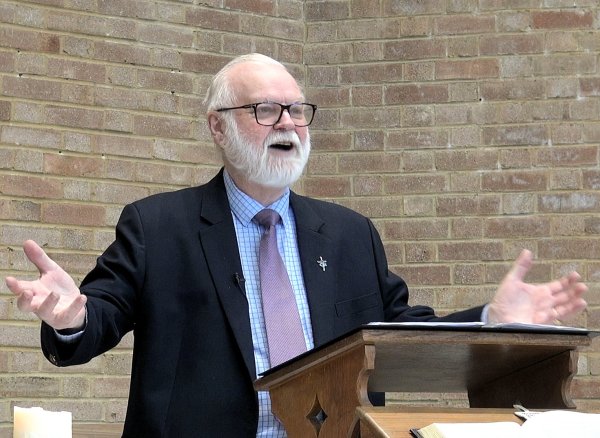
We needed to become fishers of men. After last week, had everybody gone out to speak to somebody new about our church, to tell them what was going on? Because some people were hearing it. He’d met one person, not from our church, who’d said yes, they’d heard about our church. We did so much. We needed to do more than do things for our own people. We needed to do things for people outside, and we needed to invite them to come in to see what we did.
Did we have the faith to cast our nets? Or would we fail to show the faith of Simon Peter? And would we become just another closing church, failing our Lord?
Tony believed that, with the Spirit’s help, we would not fail.
 Potters Bar United Reformed Church