
Sunday 20th December – Fourth Advent Sunday Service led by Tony Alderman
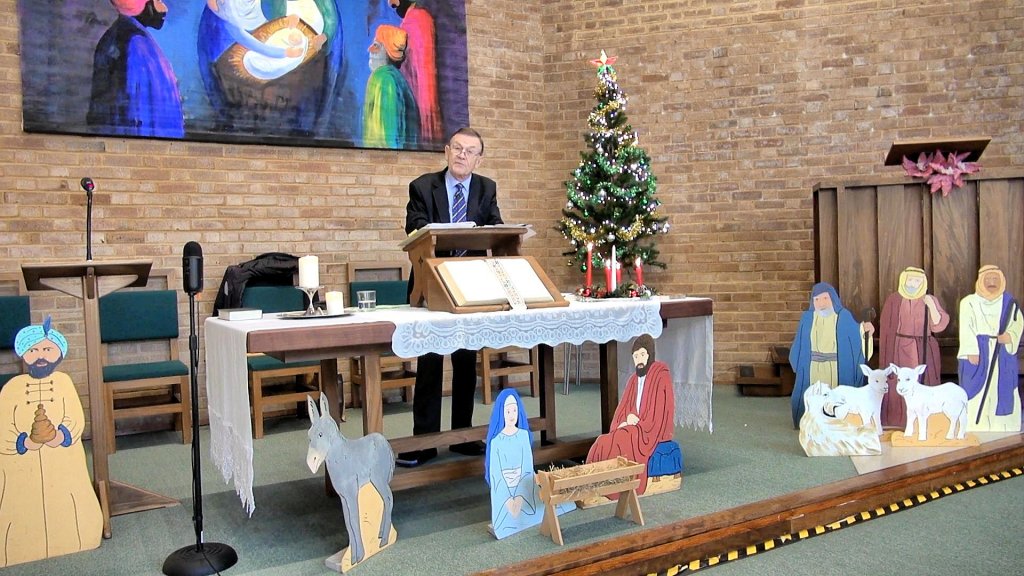
It was not Tony’s best day health wise, but we’d not have known it until almost at the end of the Service when David Ramsay stepped in to assist with the prayers of intercession. It’s at moments like these that we realise just how great Tony’s commitment is, both to sharing the Word, and to us and our church. We are very lucky!
The day’s main themes were Mary, Hope and Peace.
It was a time of hope, and Tony recalled that he’d promised a number of us that as someone on the Synod Pastoral Committee, he’d do his level best to try and help in finding ministry for us. He told us that the Eldership of his own church, St John’s New Barnet, had been advised that they would be scoped at 50% and encouraged by the moderator through their interim moderator to look for partners. And our church was amongst the potential candidates they would like to open discussions with. Tony thought that a fruitful partnership was possible. It would require us, perhaps, to find a Church secretary and an interim moderator but there was a condition set by their Elders, the background of which he explained to us, for their Elders to meet ours. Although he was for health reasons no longer a serving Elder of his church, our Elders and members could ask him things later, or telephone him at any time.
But the day was for worship and we came to give thanks for the birth of Jesus Christ. And that was why the day’s message was of Mary, of Hope, and Peace. We’d lit the candle for the people of Germany, our European neighbours, but throughout Africa, the Middle East things were going on. Though today was a time of hope, we didn’t always know what lay ahead.
The day’s readings were from Micah 5 and Luke 1. In the passage from Luke, Mary, who has found out she will give birth to the Messiah, is visiting her cousin Elizabeth who is also unexpectedly pregnant. She breaks out in a song of praise for what God has done in her life and God’s faithfulness to his promises. And on this fourth Sunday in Advent we joined with Mary in seeking solace and peace in trouble. Micah, like Isaiah, had looked forward to the coming of a new king from the line of David with humble though historically deep roots.
Mary and Elizabeth met at a time full of personal turmoil. Mary was young and probably feeling outcast and unsure. They both might be wondering what the neighbours were saying about their unexpected pregnancies. Yet there was a real joy in their time together and they found peace and acceptance of God’s will and a real sense of mutual support and encouragement.
A hymn by Fred Kahn expressed it, “Put peace into each other’s hands and, like a treasure, hope”. In an art competition held on the theme of peace, the winning painting didn’t show images of green fields with sheep grazing safely, or streams and trees swaying gently in the breeze, but a bird in a nest protecting its young in a tree that was swaying in a howling gale. What image would we have selected?
Maybe we could have come up with a sculpture like the throne of weapons by the Mozambican artist, Cristava Canovato made from decommissioned weapons.
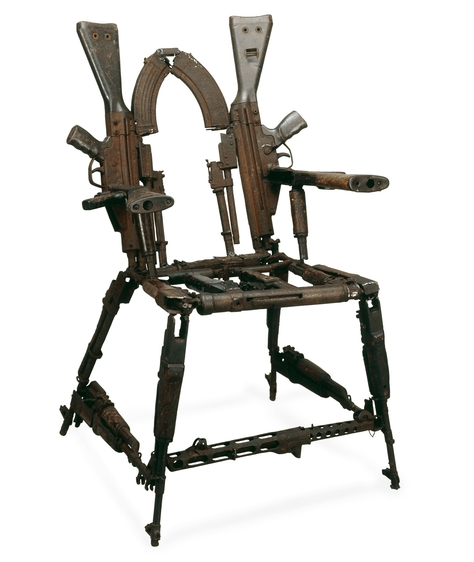
The sculpture is said to represent both the tragedy of war and the human triumph of those who achieved a lasting peace.
Alan Gaunt’s hymn begins, “We pray for peace, but not the easy piece built on complacency, and not the truth of God”. Martin Luther King said, “True peace is not merely the absence of tension. It is the presence of justice.” What about the image of Graham Kendrick’s song ‘Thorns in the Straw’ which suggests that Mary may have seen as she looks at the sleeping child by his head a thorn. And did she smell myrrh in the air on that starry night, the song continues. The baby lying peacefully in the manger, the one whose birth we would celebrate on Wednesday, the one who angel said, would bring peace on earth, was threatened right from the start. He brought peace. But at what cost?
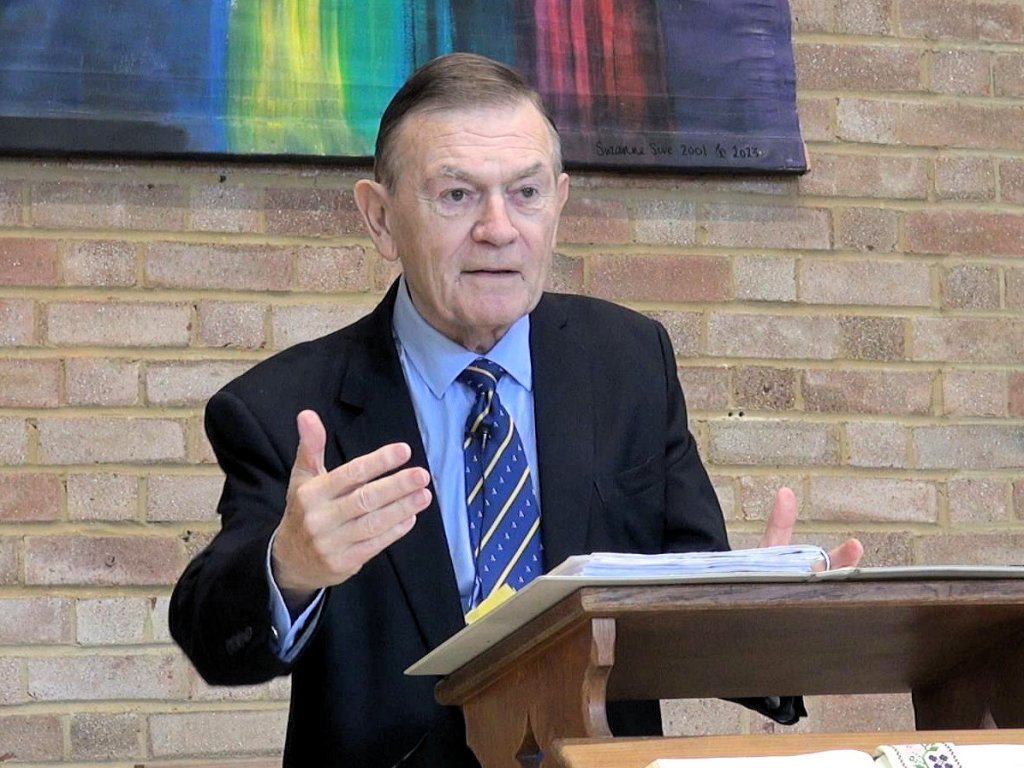
Then there is the traditional symbol of peace the dove – surely this would suggest a placid creature. But you might see a different picture if you were to see a collared dove whose nest was being threatened by magpie. There is nothing static or placid about Mary’s song. It is a song about righting wrongs. A peace that will come through justice and action. To achieve it we need to find peace at times of turmoil and to be peacemakers – to bring a peaceful space for others. Are there wrongs we can put right? So what will our picture be of peace? What would it look like, and would it change lives?
We hope, we hope, we hope.
Pages: 1 2 3 4 5 6 7 8 9 10 11 12 13 14 15 16 17 18 19 20 21 22 23 24 25 26 27 28 29 30 31 32 33 34 35 36 37 38 39 40 41 42 43 44 45 46 47 48 49 50 51 52 53 54 55 56 57 58 59 60 61 62 63 64 65 66 67 68 69 70 71 72 73 74 Potters Bar United Reformed Church