
Sunday 1st December – Advent Communion Service led by Anne Walton
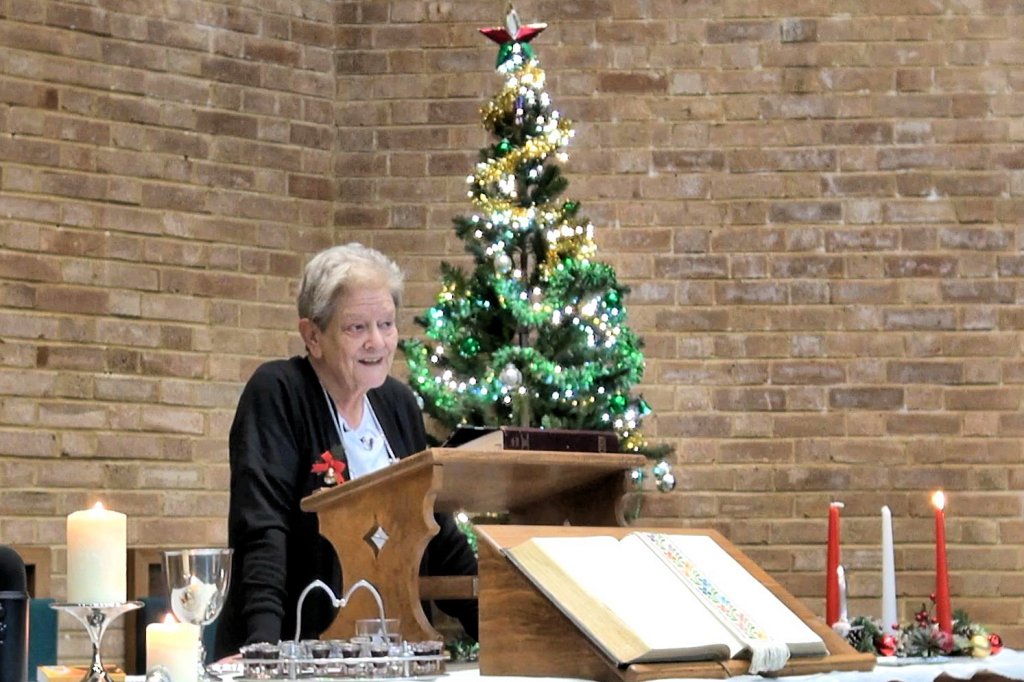
As it was Advent our choir sang the Advent Hymn……..

……… and we also sang Happy Birthday to Margaret Hill – on the day!
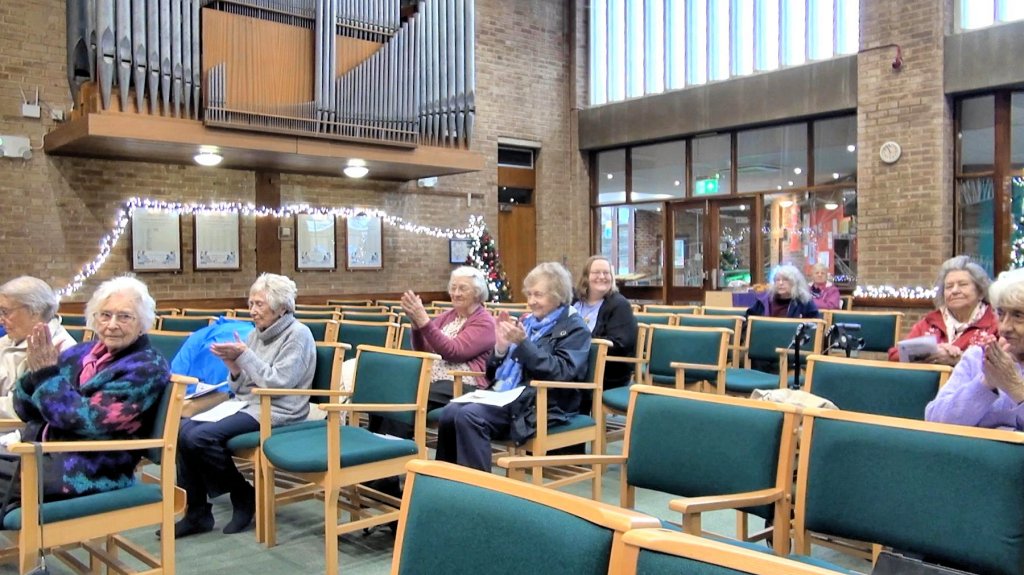
Anne’s Reflections on our readings were true “silk purses”.
Jeremiah’s words in Jeremiah 33, vv 14-16, Anne thought, must have brought hope to his listeners, hope for a better and brighter future, when all people everywhere would be able to live in peace and harmony with each other, and God’s rule would prevail. We were still wishing for that. Such a shame! But she felt it was comforting to have something good to look forward to.
As a child Anne had found the end of the summer holidays just a little depressing. A return to school was imminent but that feeling was tempered luckily by a sense of anticipation and hope. Good things were on the horizon because although she and her brother (who had birthdays in August) missed out on summer birthday parties, her mother would organise a joint Halloween/Birthday Party.
Plenty of games, and her mother dressed as a witch – the cloak, the hat, the hair, everything! And presiding over the very large lucky dip cauldron filled with presents for the lucky dip which replaced the traditional party bags that kids went home with. She could still taste the flavour of the homemade Scottish tablets (Fudge to us uneducated non-Scots). Yes, it just melted in your mouth – pure butter, sugar, and condensed milk. Oh, yummy!
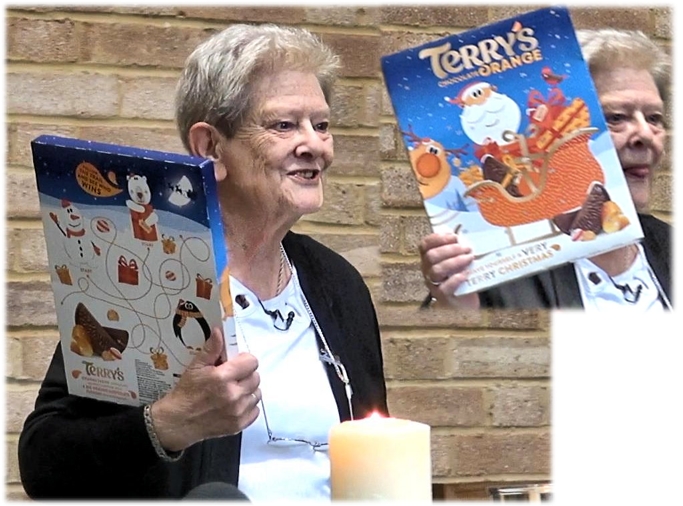
Her friends had lived in hope of receiving an invitation to her rather unusual birthday party, and she thought that many of them, like her, would also have looked forward to being given a chocolate advent calendar. She now bought her own (cue to flaunt her Terry’s Chocolate Orange Advent Calendar), and planned to open that first door when she got her cup of coffee after the service.
So Jeremiah’s listeners must have been anticipating the time when God would fulfil his promise to provide them with a just and righteous King. And this morning, the first Sunday in Advent, we looked forward to celebrating the anniversary of Jesus’s birth.
Advent for Anne as a child had been a time of expectation, anticipation, and excitement. It meant Jesus would be born in Bethlehem but also presents and Santa Claus. She looked forward to the future one day at a time. As she grew a bit older, something had happened somewhere along the way of her life: life got really real, and advent had changed. It wasn’t any longer just the season before Christmas, a countdown. Advent had come to mean the reality of her life and the world, a season of change, a season of letting go, and looking to a future that wasn’t yet clear or known to her. And she shared with us thoughts about why her life might have changed, and the world as she had known it ended.
What were our advent stories? She was sure we had lived through seasons of change, seasons of letting go, seasons of stepping into a very uncertain future. And she did sometimes wish that advent was as simple and as easy as opening a little door on the calendar, eating a piece of yummy chocolates, knowing Christmas was one day closer. But of course, it wasn’t.
So maybe that was why every year on this day, the first Sunday in Advent, we always heard a Gospel text (Luke 21, vv 25-26) that described the end of the world and the signs that would accompany that ending. It wasn’t just a story about Jesus and his disciples, it was our story.
Jesus had said that if we looked, we’d see the signs – in the sun, the moon, the stars, in the roaring of the sea and its waters. We’d had quite a lot of experience with that recently. Storms and rainfall, pictures of refugees, and the violence that was taking place throughout our world.
The signs were everywhere, and they were not hard to see but they were too easily misunderstood and misused. These were words of hope and reassurance but far too often they were heard as words of warning and threat. And when they were, the signs were used to predict a future of impending doom and gloom and loss. They became indicators that the world was about to end, and you’d better shape up or God is going to get you – misunderstandings that pushed us further into darkness and deeper into fear.
The signs were not a reason to hang our heads in despair or shrink from love, they were our hope and our reassurance that God had not abandoned us. Despite all that had gone wrong, God had not abandoned us and still noticed us. God cared for each and every one of us, and if we would let Him, He’d participate in our individual life circumstances.
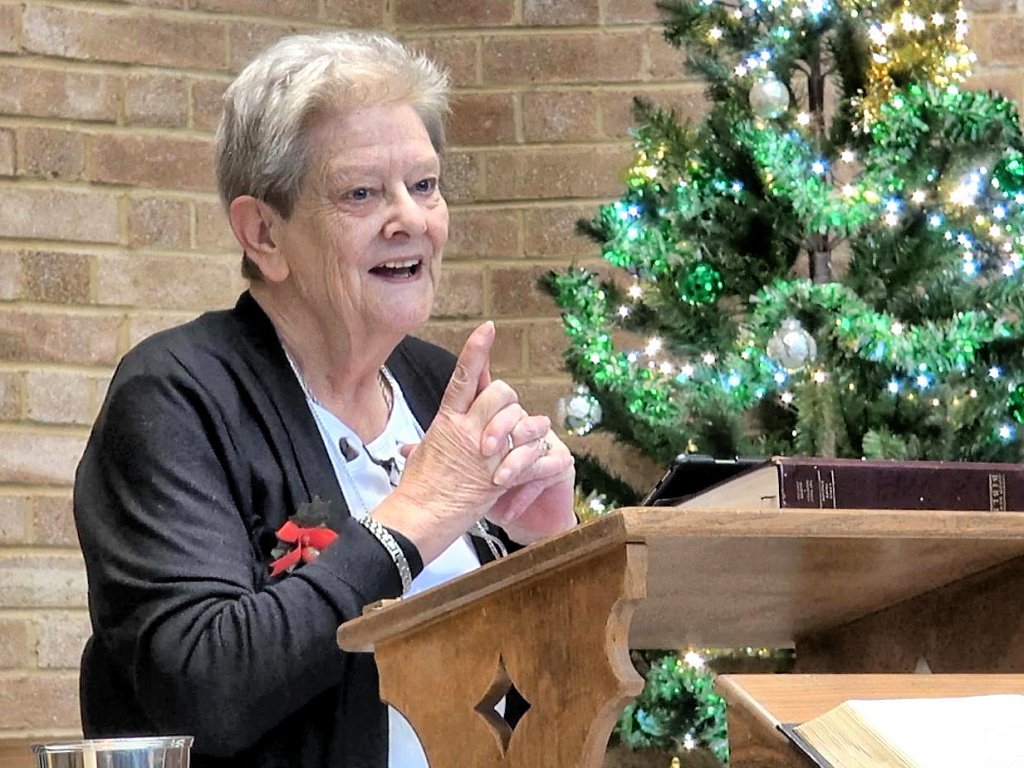
Jesus’s parable of the fig tree taught us how to read signs that were as ordinary and as common as a fig tree in the spring. We saw the leaves and knew that something was happening – summer, a new season with new life, new growth – and hopefully new fruit.
So what if we looked at our lives and our world and began to read and understand the signs in our advent stories as sprouting leaves. Anne believed it would mean that the kingdom of God was near for us and that we were entering a new season with new life and new growth, producing new food. We could open the doors of our life with new courage and new confidence. We could look on the world with a new sense of compassion and hope. We would be strengthened to do the work that God had given us to do. Yes, the seasons of our lives could be long, difficult, and indeed even painful. But we never faced those seasons without signs of hope and reassurance – signs that pointed to the one who was coming.
 Potters Bar United Reformed Church