
Sunday 10th November – Remembrance Sunday Service led by John Wainwright
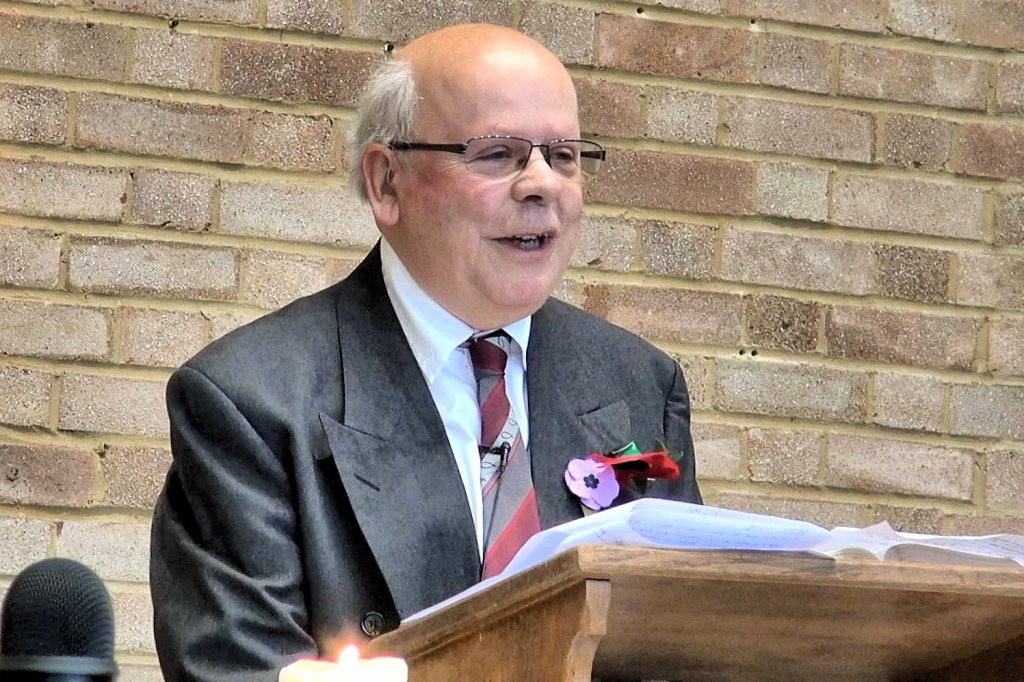
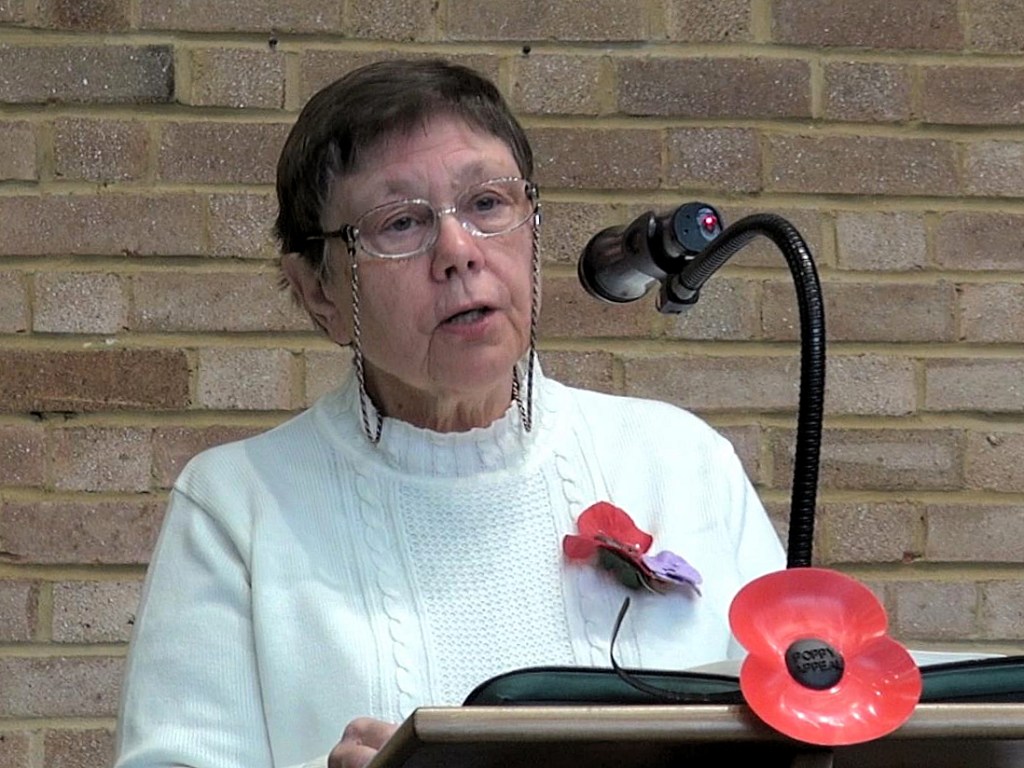
Just occasionally we get more than expected on a Sunday and with the Wainwrights it was definitely a 2 for 1 deal, with Sue taking the first reading after John had prepared us for the two minutes of silence and provided some pictures he’d taken on a visit to the Normandy beaches. It’s always a moving moment on Remembrance Sunday.
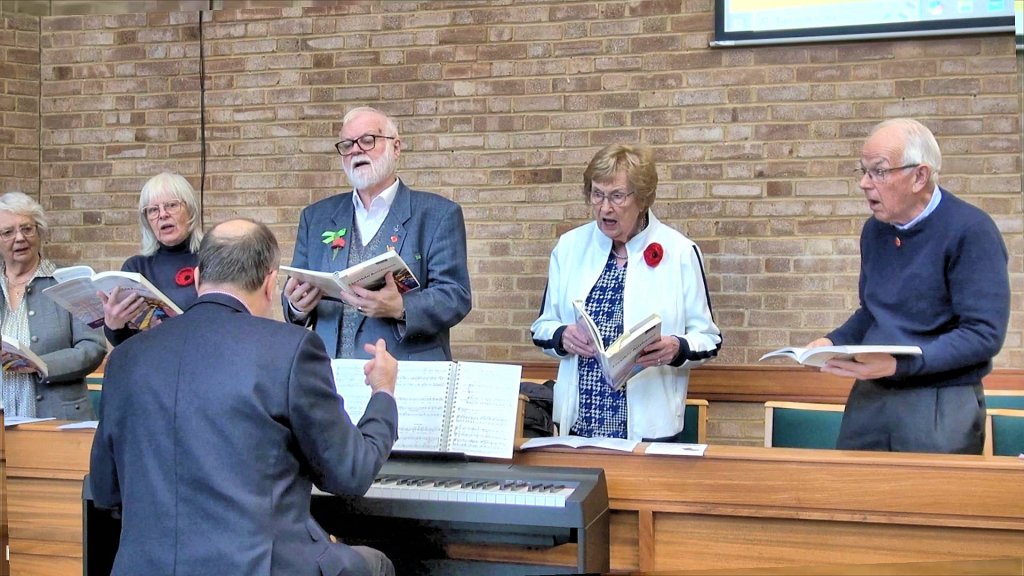
Peace was the day’s theme and our mini-choir sang “Peace between Nations” as a lead in to John’s Sermon.
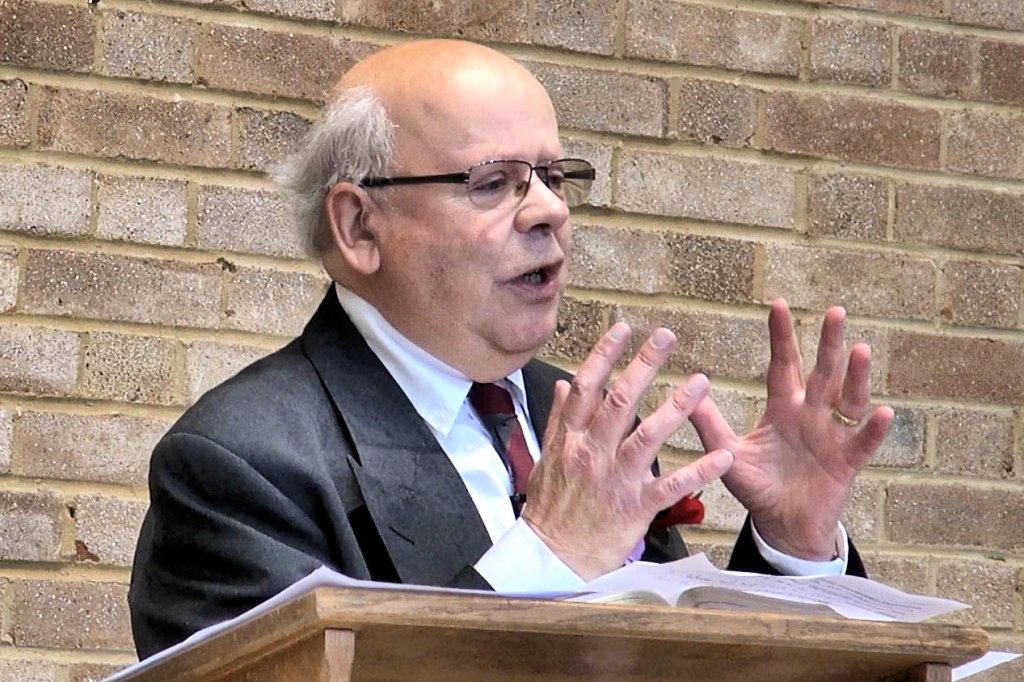
The Sermon was on Matthew 5, the Beatitudes, part of the “Sermon on the Mount” which John felt was likely to have been a collection of teachings which Jesus gave over a period of time.
The Good News version’s ‘Happy’ doesn’t quite fit the bill for many of us and John also felt that ‘Blessed’ was a better translation and a better means of understanding what Jesus was getting at. Happy could be superficial: blessedness was something that went much deeper, something that we could experience even when we were not particularly happy – even knowing joy in adversity. Blessedness was something that you could experience at any time and in any place if you had a relationship with Jesus.
So Blessed, then, are the poor in spirit, for theirs was the kingdom of heaven. This, John said, was not being in poor spirits and certainly didn’t mean welcoming poverty. It meant knowing God’s peace at a time when it was the hardest to experience it because of the difficulties we were going through.
Blessed are those who mourn, for they shall be comforted. Mourning was not a very nice experience, but sometimes at the time when we were grieving, we could experience many blessings, and we could know who our true friends were when we were going through the mire. Also, we could mourn at all sorts of things, a world of suffering or our own unworthiness. But even in this situation we could know and experience God’s comfort.
Blessed are the meek, for they shall inherit the earth. Again, meek was a word that seemed to have changed in its meaning, often being associated with being a little bit soft. It didn’t mean that, of course. It was nothing to do with being subservient, but really it was about the need to be humble. Readiness to learn, not being arrogant, being self-controlled in language and behaviour – that was what Christians were called to be; to be tender and to be loving, and not to show selfish anger.
Blessed are those who hunger and thirst for righteousness, for they shall be satisfied. In in the Epistle of John we could read that we could not love God or claim to love God if we did not love other people. So as Christians, we should be passionate about righteousness, about right standards in society, which so often were far from being Christian standards. So blessed were those who hungered and thirsted for righteousness, for they would be satisfied if they placed their hope and their trust in God and in His power to give us the kind of character which Jesus would wish us to have.
Blessed are the merciful, for they shall obtain mercy. This didn’t mean that if somebody had done wrong, that justice and the courts should be scrapped, that there should be no judges. There had to be justice as well as mercy. But first and foremost we should as Christians seek to be merciful and to show love. We all made mistakes and were in need of the forgiveness of God. So in that sense we were all on a similar level, and we needed to remember that, and show mercy to those who had perhaps wronged us in some way or other.
Blessed are the pure in heart, for they shall see God. How pure were our hearts? What was our motive in coming to church this morning? Did we think that for respectability’s sake we should be there? Did we think that it would be a nice opportunity to meet up with our friends? And John, was he with us because he fancied himself, standing at the front of the church? We could all have mixed motives in life. It was not always as pure as it ought to be.
Blessed are the peacemakers, for they shall be called the sons (or daughters) of God. That, of course, was one of the things we focused on particularly this Remembrance morning, being peacemakers. It didn’t just mean liking peace, loving peace. It was something that had to be actively worked for, not just a passive feeling. Were we working for peace in our lives? Were we working for peace where there might have been conflict, conflict in family, conflict in in all sorts of different situations. We should be seeking to be reconcilers where we knew there was a conflict. We were called to be people striving for peace, to spread love, to spread understanding, and to try to bring people together rather than saying things which would create conflict.
Blessed are those who are persecuted for righteousness sake, for theirs is the kingdom of heaven. There could be times when we might well be persecuted, though not in the sense the Christians were persecuted in the first few centuries of the Church. We might feel persecuted today when people said, “Oh, you know, that’s a lot of rubbish. What do you go to church for?” and we find we couldn’t find an answer that a non-Christian could understand. And sometimes we had to take a stand on situations where non-Christians, even people within the family, wouldn’t understand. It was not always easy, but we didn’t have to rely on our own strength. God was ready to empower us afresh with His Holy Spirit, so that we might be in our lives a better witness for Jesus Christ. Were our standards just a carbon copy of what was going on out there? Or did they reflect the ideals that Jesus called us to. It was an important question, and something that we needed to focus on not only this morning, but each day of our lives.
(Perhaps we also needed to reflect on how a radical like Jesus would interpret those ideals for today’s society, rather than holding strictly to the words he spoke to the society he encountered 2000 years ago?)
John asked God to help us to understand His word better, to help us to be more faithful in reading that word, to help us to be more faithful in our prayer life – and in loving and reaching out to those who didn’t yet know him.
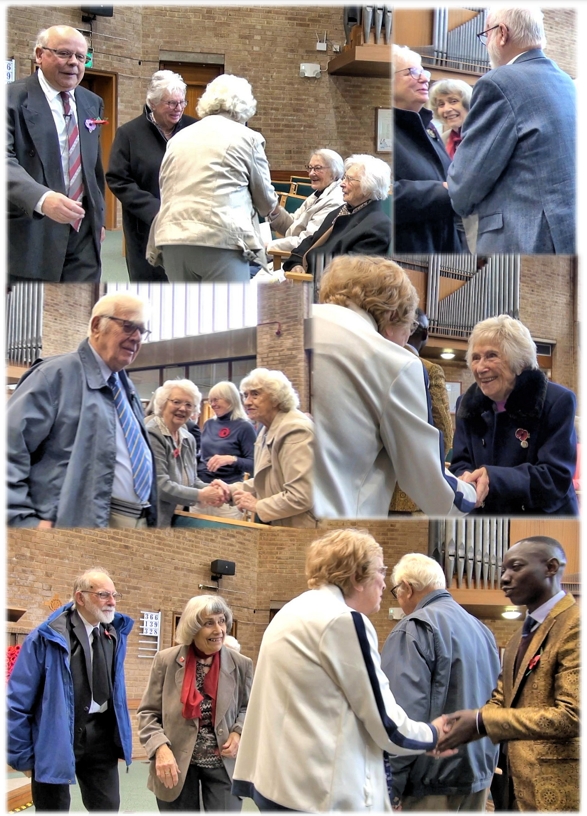
And then John invited us to do something we rarely do – to share the Peace with one with another. And this went on for so long that we had to be called to order – coffee was waiting!
 Potters Bar United Reformed Church